
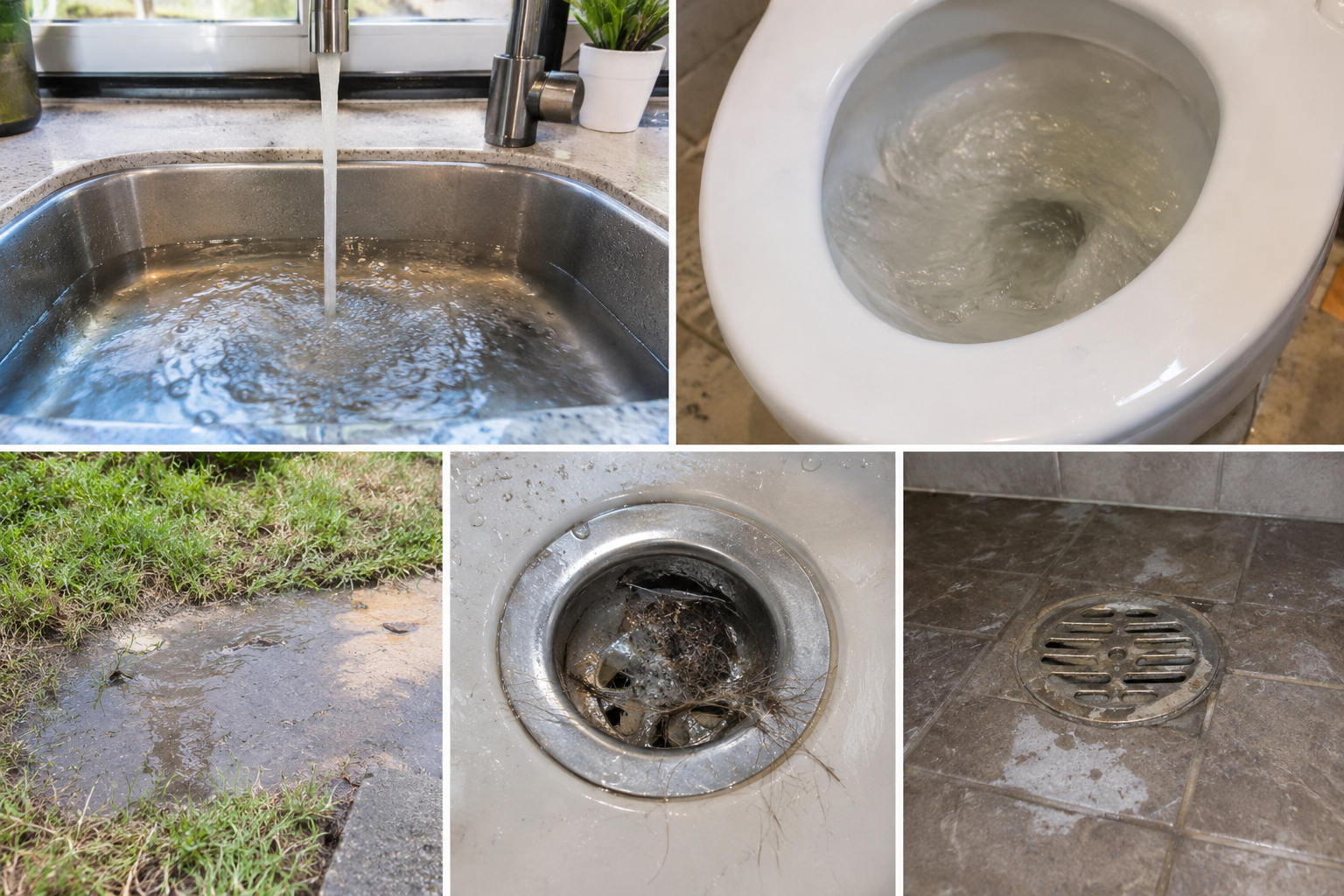
5 Real Signs Your Gardena Home’s Sewer Line Is About to Fail
Your sewer line doesn’t fail with a dramatic announcement. There’s no check engine light for it. What you get instead is a handful of small, easy-to-explain-away clues: a slow drain here, a weird smell there, that most people quietly ignore for months before something finally forces the issue.
The good news is those clues are actually pretty consistent. Once you know what to look for, your sewer line is honestly not that mysterious. Let’s go through the five real signs worth paying attention to, plus a few things that look scary but usually aren’t.
Table of Contents
Quick Answer
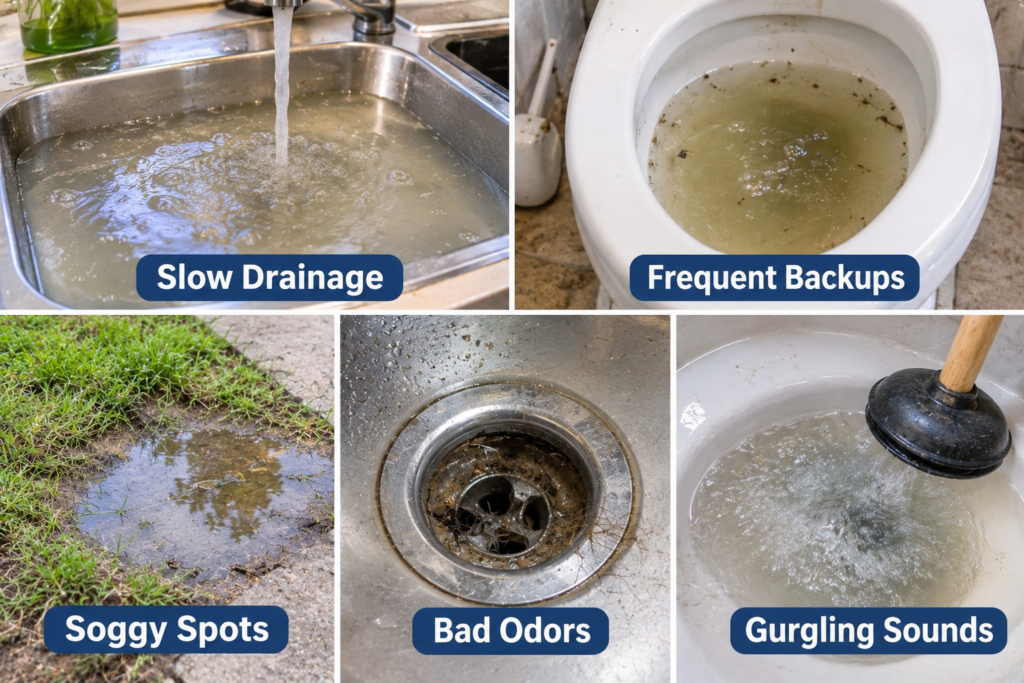
The five real signs your sewer line may be failing are: slow drains in more than one fixture at once, gurgling sounds from drains you’re not using. A persistent sewage smell in your house or yard, an unusually green or soggy patch of lawn, and recurring backups that keep coming back after a “fix.” One of these alone might be nothing. Two or more together are worth a sewer camera inspection.
Why Catching These Signs Early Actually Matters
A sewer line rarely goes from fine to fully failed overnight. It’s a slow fade, and the signs below are basically your line’s way of clearing its throat before it says something louder. Catching them early is the difference between a scheduled repair and an emergency one, and usually the difference in cost too.
The 5 Real Signs of a Failed Drain
These are the patterns that actually point to your main sewer line, the lateral running from your house to the City’s main line, not just a single fixture having an off day.
1. Slow Drains in More Than One Fixture
A single slow bathroom sink is usually just that sink. But if your shower, your toilet, and your kitchen sink are all draining slowly around the same time, that’s not four separate coincidences. That’s one shared line struggling to keep up.
2. Gurgling From Drains You’re Not Even Using
Gurgling happens when trapped air escapes past a blockage. A gurgle in the toilet right when you run the washing machine, or bubbling in the tub when you flush, means air (and wastewater) is looking for another way out. That’s your sewer line, not your imagination.
3. A Sewage Smell in Your House or Yard
This one doesn’t leave much room for interpretation. A sewage odor, especially one that lingers or shows up in a specific spot in the yard, usually means a blockage or crack is letting gas or wastewater escape somewhere it shouldn’t.
4. An Unusually Green or Soggy Patch of Lawn
Wastewater is basically fertilizer. A patch of grass that’s noticeably greener, spongier, or wetter than the rest of your yard, especially when it hasn’t rained, often means your sewer line is leaking right underneath it.
5. Recurring Backups You’ve “Fixed” More Than Once
A backup that clears and then comes back within weeks or months isn’t actually fixed. Something, often a root intrusion or a damaged joint, is still there, quietly causing debris to collect at the same spot every time.
Signs at a Glance
| Sign | What’s actually happening | Isolated fixture or sewer line? |
|---|---|---|
| One slow drain | Local clog near that fixture | Usually isolated |
| Multiple slow drains at once | Shared blockage further down the line | Sewer line |
| Occasional single gurgle | Minor air pocket, often harmless | Usually isolated |
| Gurgling in unused drains | Blockage forcing air elsewhere | Sewer line |
| Sewage smell, persistent | Crack or blockage releasing gas | Sewer line |
| Green, soggy lawn patch | Leaking wastewater underground | Sewer line |
| Backup that keeps returning | Underlying cause never resolved | Sewer line |
Signs That Look Scary But Usually Aren’t
Not everything unusual in your plumbing means a sewer emergency. A little honesty here goes a long way.
- One slow drain that clears with a plunger. That’s a local clog, not a sewer line problem.
- A single gurgle, once, that doesn’t repeat. Could just be a temporary air pocket. Worth noting, not worth panicking over.
- A slightly damp spot after heavy rain. Normal drainage, especially in a yard with clay-heavy soil, isn’t automatically a sewer leak.
- A toilet that runs a little loud when flushing. That’s almost always a fill valve issue, unrelated to your sewer lateral entirely.
The real pattern to watch for is more than one sign showing up together, or any single sign that keeps repeating instead of resolving.
Why These Signs Show Up More Often in Gardena Homes
A lot of Gardena’s housing stock was built during the postwar boom, decades before PVC pipe became standard. Which means a meaningful number of homes are running on original clay, cast iron, or Orangeburg pipe. We’ve written more about exactly which material matches which build era on our blog, but the short version is this. Older pipe means more joints for roots to find, and more decades for soil movement to do its slow damage.
Mature trees across Gardena’s older lots add to it. Roots don’t create the initial weakness in a pipe joint. But they take full advantage of it once it’s there, which is exactly why recurring backups and gurgling are such common complaints in neighborhoods like Hollypark and El Camino Village.
What Happens If You Wait Too Long
Ignoring these signs doesn’t make them resolve on their own; it usually just buys the problem more time to get worse. A root intrusion that’s just cutting-back-manageable today can, left alone for another year or two, progress into a cracked joint that needs an actual repair instead of routine maintenance. A slow drain that’s easy to explain away in September becomes a much less convenient emergency in the middle of a January storm.
There’s a cost side to this too. A camera inspection that catches a developing issue early is a $175 to $350 conversation. The same issue, discovered after a full backup, often turns into a same-day emergency call plus whatever repair the neglect turned it into. Early signs are genuinely the cheapest version of this problem you’ll ever get to solve.
What to Do When You Notice One of These Signs
One sign, mild, isolated to one fixture? Try the basic DIY steps first, a plunger or a short snake run often handles it.
Two or more signs together, or a sign that keeps repeating? That’s your cue for a sewer camera inspection. A camera shows you exactly what’s happening instead of leaving you to guess.
Sewage smell or a soggy yard patch? Skip the DIY step entirely and get it looked at. These two in particular tend to mean something is already actively wrong, not just slow.
Not sure which category you’re in? That’s normal, and it’s exactly what a camera inspection is for. It turns a vague “something feels off” into an actual answer.
Quick Self-Check
- Is more than one drain affected, not just one fixture?
- Has this happened before, more than once?
- Any smell, anywhere in the house or yard?
- Any unusually green or wet patch in your lawn?
- Does it come back within weeks even after clearing it?
Two or more checked boxes is a strong signal it’s time to call a professional rather than try another round of DIY.
Frequently Asked Questions
What We Handle at Flow Pro
If any of these signs sound familiar, that’s exactly the moment to get a real answer instead of another guess. Flow Pro is a Gardena-based sewer and drain specialist, and this is genuinely all we focus on.
Here’s what that looks like:
- Sewer Line Inspection — a full camera look that turns “something feels off” into an actual diagnosis
- Sewer Line Cleaning — hydro jetting for buildup before it becomes a recurring backup
- Rooter Service / Root Intrusion Removal — for the roots behind so many of Gardena’s recurring-clog stories
- Sewer Line Leak Detection — for that unexplained green patch or damp spot in the yard
- Sewer Line Locating — mapping your line’s exact path before any repair begins
- Sewer Line Spot Repair — for one confirmed problem area a camera inspection turns up
- Trenchless Sewer Repair (CIPP) — for damage spread across a run of pipe, without digging up your yard
Every visit starts with an actual look at what’s happening, not a guess, and you get written pricing before anything happens. We serve Gardena, CA and the surrounding ZIP codes 90247, 90248, and 90249, including Hollypark, El Camino Village, Strawberry Park, and Moneta.
Your sewer line has been dropping hints. This is your sign to actually listen to them.
Sources: Hollypark and El Camino Village neighborhood data · sewer pipe material and installation era data consistent with the site’s service pages and Cost Guide.